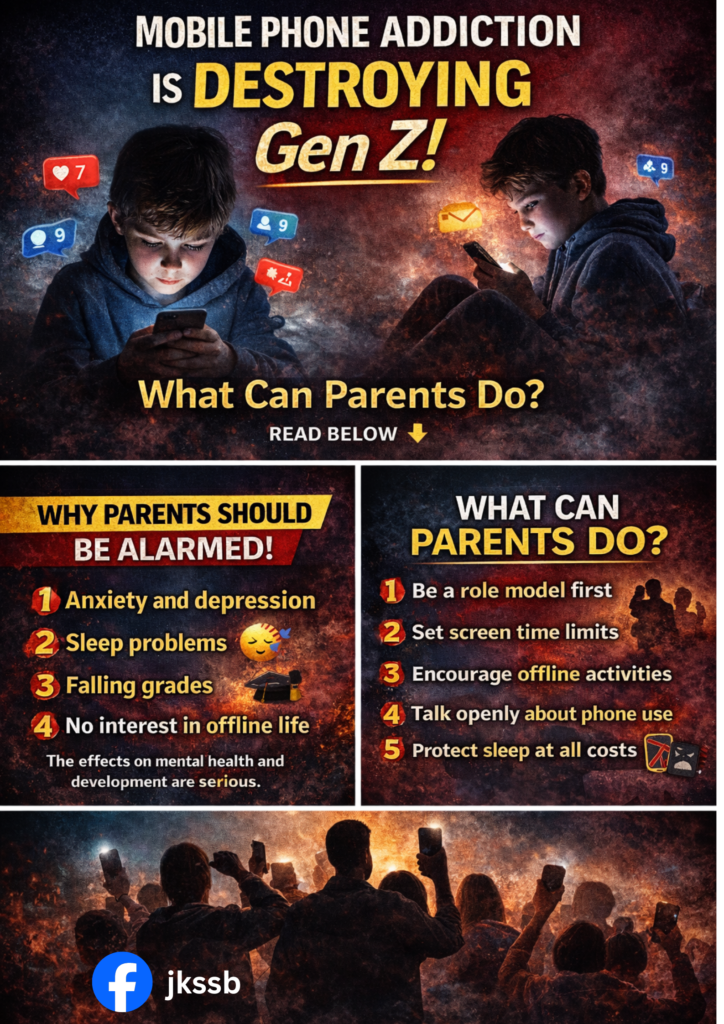
Mobile phones were meant to make life easier. But for Gen Z, they have quietly become something far more dangerous. This addiction is reshaping childhood, damaging mental health, weakening attention spans, and altering how an entire generation thinks, learns, and connects.
From endless scrolling on social media to late-night gaming and constant notifications, mobile phone addiction is no longer a small problem. It is a full-blown crisis. Parents, teachers, and psychologists across the world are raising the same alarm: Gen Z is spending too much time on screens, and it’s costing them their well-being.
So how did we get here? And more importantly, what can parents do before it’s too late?
Common signs of mobile phone addiction include:
- Anxiety when the phone is not nearby
- Constant checking of notifications
- Loss of interest in offline activities
- Irritability when screen time is restricted
- Decline in academic performance
- Sleep problems and fatigue
What makes this addiction especially dangerous is that it often goes unnoticed. Phones are socially accepted, even encouraged, making overuse feel “normal.”
Why Is Gen Z Most Affected?
Gen Z is the first generation to grow up fully immersed in smartphones and social media. Unlike previous generations, they never experienced a world without constant internet access.
Several factors make Gen Z particularly vulnerable:
1. Early Exposure
Many children now receive smartphones at a very young age. Their brains are still developing, making them more sensitive to dopamine-driven habits like scrolling, likes, and notifications.
2. Social Media Pressure
Platforms are designed to keep users hooked. Likes, comments, streaks, and viral trends create a cycle of validation and comparison that is extremely addictive.
3. Fear of Missing Out (FOMO)
Gen Z lives in constant fear of being left out, missing a message, a trend, or a moment. This keeps them glued to their screens.
4. Digital Escape
Stress, academic pressure, loneliness, and uncertainty about the future push many young people to escape into the digital world rather than face real-life challenges.
How Mobile Phone Addiction Is Destroying Gen Z
The impact of mobile phone addiction goes far beyond “wasting time.” Its effects are deep, long-lasting, and alarming.
1. Mental Health Crisis
Anxiety, depression, low self-esteem, and loneliness are rising sharply among Gen Z. Excessive screen time, especially on social media, exposes young people to constant comparison, cyberbullying, unrealistic lifestyles, and negative content.
Many teens measure their self-worth through likes and followers. When validation doesn’t come, it leads to emotional distress.
2. Sleep Deprivation
Late-night scrolling is destroying sleep cycles. Blue light from screens suppresses melatonin, making it harder to fall asleep. Poor sleep affects memory, mood, immunity, and academic performance.
A tired mind is more vulnerable to stress, anxiety, and addiction.
3. Declining Attention Span
Short videos, reels, and constant notifications train the brain to seek instant gratification. As a result, Gen Z struggles with focus, patience, and deep thinking.
Reading long texts, studying, or even holding meaningful conversations becomes difficult.
4. Academic and Career Impact
Mobile phone addiction often leads to procrastination, reduced concentration, and lower academic performance. Over time, this can affect career readiness, discipline, and work ethics.
5. Weakening Social Skills
Ironically, a generation more “connected” than ever is struggling with real human connection. Face-to-face communication, empathy, and emotional intelligence are declining as screen interactions replace real conversations.
Is Mobile Phone Addiction Really That Serious?
Yes. Experts now compare excessive smartphone use to other behavioral addictions like gambling. The brain’s reward system is constantly stimulated, making self-control difficult especially for young minds.
Ignoring this issue doesn’t make it disappear. It allows the problem to grow quietly until it becomes deeply ingrained.
What Can Parents Do? (Practical & Real Solutions)
Parents are not powerless. While banning phones completely is unrealistic, healthy boundaries and guidance can make a massive difference.
1. Be a Role Model First
Children learn more from what parents do than what they say. If parents are always on their phones, children will follow.
- Avoid excessive phone use at home
- Put phones away during family time
- Show that life exists beyond screens
2. Set Clear Screen Time Limits
Establish daily screen time rules based on age. Use built-in screen time tools, but don’t rely on apps alone communication matters more.
Make sure phones are not used:
- During meals
- Before bedtime
- During study hours
3. Create Phone-Free Zones
Designate certain areas or times as phone-free, such as:
- Dining table
- Bedrooms at night
- Family gatherings
This helps rebuild real-world interaction.
4. Encourage Offline Activities
Sports, reading, music, art, hobbies, and outdoor play help reduce screen dependency naturally. When children find joy offline, the phone loses its grip.
5. Talk, Don’t Just Control
Have open, non-judgmental conversations. Ask questions like:
- How does social media make you feel?
- What do you enjoy online?
- What stresses you out?
Understanding their digital world builds trust and cooperation.
6. Teach Digital Awareness
Educate children about:
- The addictive design of apps
- Unrealistic social media content
- Online safety and mental health
Awareness empowers them to make better choices.
7. Protect Sleep at All Costs
No phones in bedrooms at night. Use alarm clocks instead of phones. Healthy sleep is one of the strongest defenses against addiction.
The Role of Schools and Society
Parents cannot fight this battle alone. Schools should promote digital well-being, teach focus skills, and encourage offline learning. Society must stop glorifying constant connectivity and start valuing balance.
A Wake-Up Call, Not a War on Technology
Technology itself is not evil. Smartphones can educate, connect, and empower. The problem is uncontrolled use without guidance.
Gen Z does not need phones taken away they need support, boundaries, and understanding.