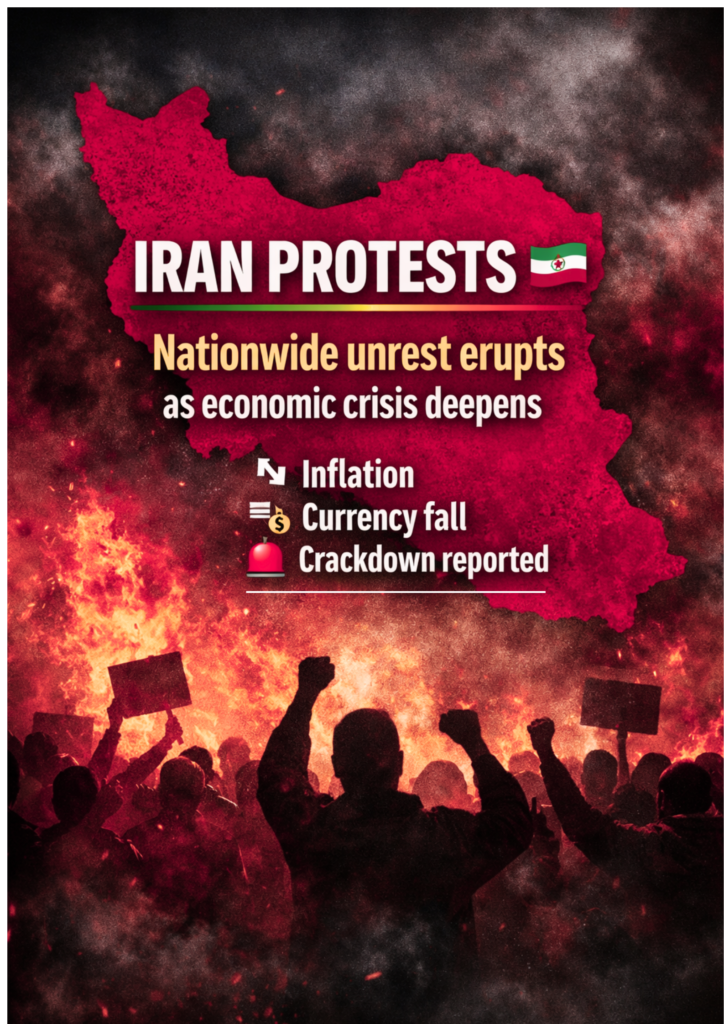
Iran is once again gripped by widespread protests as growing economic hardship, political frustration, and public despair push thousands of people onto the streets across the country. From Tehran to smaller provincial towns, demonstrations have been reported in dozens of cities, reflecting a deep and widening crisis that goes far beyond a single issue or event.
At the heart of the unrest lies Iran’s collapsing economy. Ordinary Iranians are struggling to survive as inflation soars, the national currency loses value, and the cost of necessities such as food, fuel, and medicine rises sharply. For many families, wages have failed to keep pace with prices, forcing painful choices between essentials. What began as anger over economic conditions has now transformed into broader protests questioning governance, accountability, and the future of the country.
Streets Fill With Anger and Despair
Over recent days, protesters from different backgrounds — including workers, students, shopkeepers, and unemployed youth — have gathered in city centers, markets, and near government buildings. Videos circulating on social media show crowds chanting slogans against the government and senior leadership, calling for justice, reform, and dignity. In some areas, protesters have blocked roads or closed shops in symbolic acts of defiance.
Unlike earlier demonstrations confined to specific regions or social groups, the current unrest appears more widespread and sustained. Analysts note that protests have occurred simultaneously in multiple provinces, suggesting coordination driven by shared grievances rather than isolated incidents. The scale of participation points to a society under severe strain.
Economic Collapse as the Main Trigger
Iran’s economy has been under pressure for years due to international sanctions, mismanagement, corruption, and limited access to global markets. However, recent months have seen conditions worsen dramatically. The Iranian rial has hit record lows against foreign currencies, reducing purchasing power and fueling inflation. Prices of everyday goods have increased rapidly, while job opportunities remain scarce, especially for young people.
Many Iranians say they feel trapped, watching their standard of living decline year after year with no clear path forward. Pensioners complain that their savings are losing value. Small business owners struggle with rising costs and falling demand. Even middle-class families, once relatively secure, are now feeling the squeeze.
For many protesters, economic frustration has merged with political anger. There is a growing belief that the system is unable or unwilling to address the real needs of the population.
Heavy Crackdown by Security Forces
As protests have spread, Iran’s security forces have responded with force. Riot police, paramilitary units, and plainclothes officers have been deployed in large numbers. According to reports from human rights organizations, security forces have used tear gas, batons, and in some cases live ammunition to disperse demonstrators.
Clashes between protesters and security personnel have resulted in deaths and injuries. Rights groups say several people have been killed during the protests, including children, raising a serious alarm internationally. Hundreds of protesters are believed to have been arrested, with many families unaware of the whereabouts of detained relatives.